Craft and Technology: Creating Customized Products with 3D Printing
The Transformative Power of 3D Printing in Creative Industries
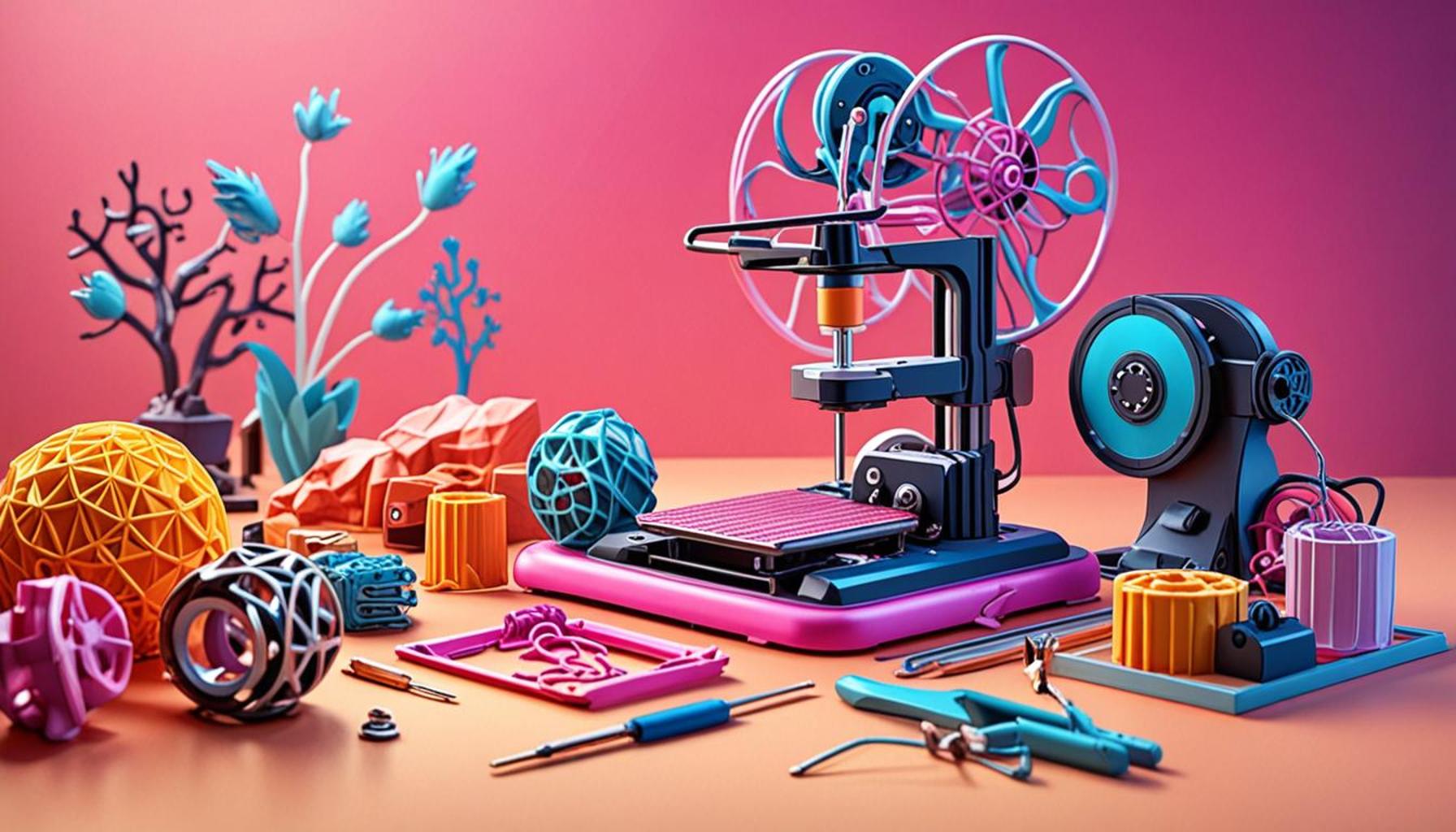
The realm of creativity is undergoing a profound transformation, blending traditional craftsmanship with cutting-edge technology. One of the most exciting developments in this space is the rise of 3D printing, a tool that empowers artisans, makers, and designers to bring their visions to life like never before. This technology democratizes the creative process, allowing for an unprecedented level of experimentation and innovation.
Imagine a world where:
- Unique home décor items can be designed and printed at will, tailored to match individual styles and preferences.
- Custom-fit clothing and accessories are crafted to meet the specific needs of each wearer, breaking away from the limitations of standard sizing.
- Functional prototypes can be quickly developed and tested for new inventions, allowing inventors to iterate designs faster than ever before.
This technology not only accelerates the production process but also allows for a level of personalization that was previously unimaginable. In the United States, we see innovative applications across various fields that highlight the potential of 3D printing:
- Health care: Hospitals are utilizing 3D printing to create bespoke prosthetics and implants tailored to the specific anatomical needs of patients. This innovation not only enhances comfort but can also significantly improve functionality, leading to a better quality of life.
- Education: In classrooms, educators are engaging students through hands-on learning experiences. 3D printing enables the rapid creation of models for scientific concepts, allowing students to explore complex ideas in a tangible form.
- Fashion: Designers are using 3D printing to craft unique pieces for exclusive collections, revolutionizing the fashion industry. This approach allows them to experiment with intricate designs that would be impractical to produce using traditional methods.
As we delve deeper into the synergy between craft and technology, we uncover a landscape filled with endless possibilities. The community of creators—from seasoned artisans to hopeful newcomers—can now explore their imaginations in ways that were once confined to dreams. Furthermore, as the technology continues to evolve, we witness the emergence of more sophisticated materials and printing techniques that enhance durability and aesthetic appeal.
This exploration calls for curiosity and readiness to embrace change. As individuals and industries harness the power of 3D printing, we are likely to witness a continuous redefinition of creativity and craftsmanship that will shape the future of various sectors, urging us all to think outside the box and consider what is truly possible in this new age of innovation.
DISCOVER MORE: Click here to dive deeper
Revolutionizing Product Design through 3D Printing
As the creative industries continue to evolve, 3D printing stands at the forefront of innovation, transforming how designers approach product development. The ability to create customized products on-demand is reshaping traditional workflows and fostering a new era of personalized craftsmanship. In this dynamic environment, creators are no longer limited to mass-produced items or generic solutions; instead, they can craft unique pieces that resonate with individual tastes and needs.
Among the most remarkable aspects of 3D printing is its capacity for rapid prototyping. Designers can quickly produce a prototype of a design, test its functionality, and refine the concept— all within a matter of days. This rapid iteration leads to shorter development cycles, enabling makers to bring their ideas to market more efficiently. Here are a few ways 3D printing is making waves in product design:
- Customization: Consumers are increasingly seeking products that reflect their identity. With 3D printing, businesses can offer custom designs tailored to individual specifications, such as personalized toys or customized electronic enclosures.
- Complex geometries: The intricacy of traditional manufacturing can limit design possibilities. 3D printing allows for the creation of complex shapes and structures that would be challenging, if not impossible, to fabricate using traditional methods. This opens a world of possibilities for innovative design.
- Material versatility: As 3D printing technology advances, new materials—ranging from biodegradable plastics to flexible composites—are becoming available. Designers can explore a greater array of textures and aesthetics, ensuring their creations stand out in the marketplace.
In the realm of consumer products, this technology has begun to influence everything from household gadgets to lifestyle accessories. For instance, 3D-printed kitchen tools that accommodate individual preferences are gaining traction, while artists leverage the technology to create intricate decorative pieces that evoke personal narratives.
Furthermore, the sustainability aspect of 3D printing cannot be overlooked. Traditional manufacturing often results in significant waste, while 3D printing is inherently more efficient, using only the necessary materials to create an object. As more consumers gravitate toward environmentally friendly practices, companies equipped with 3D printing capabilities can position themselves as leaders in sustainability.
As we delve deeper into the marriage of craft and technology, we begin to uncover the profound implications for various industries. From tailoring products to individual tastes to creating aesthetically appealing forms that challenge traditional design conventions, the potential applications of 3D printing seem limitless. This convergence is not just a trend; it represents a substantial shift in how we create and interact with the products surrounding us, empowering today’s makers and inspiring future generations.
| Advantage | Details |
|---|---|
| Personalization | 3D printing enables customers to create unique designs suited to their personal tastes, ensuring that products are one-of-a-kind. |
| Cost-Effectiveness | Fewer materials wasted in the printing process results in lower production costs, making customized products more accessible. |
| Rapid Prototyping | Designers can quickly create prototypes, allowing for faster iteration of ideas and improvements in the design cycle. |
| Material Variety | A range of materials can be utilized in 3D printing, from plastics to metals, enabling innovative solutions in product design. |
In the realm of Craft and Technology, 3D printing stands out as a revolutionary method for producing customized products across various industries. The ability to personalize items according to individual preferences attracts consumers looking for uniqueness in their purchases. Moreover, the economic benefits resulting from reduced waste and lower production costs further enhance its appeal, pushing businesses to adopt this innovative technique. The rapid prototyping capabilities significantly speed up the design process, allowing designers to test and modify their ideas quickly.As industries leverage the expansive range of materials suitable for 3D printing, innovative solutions emerge that were previously unattainable with traditional manufacturing methods. This evolution in crafting not only fosters creativity but also presents an opportunity for businesses to cater to a growing demand for personalized products, heightening the intrigue surrounding the world of customized designs.
DIVE DEEPER: Click here to discover outdoor painting techniques
Empowering Small Businesses and Startups
The integration of 3D printing is not limited to established enterprises; it is revolutionizing the way small businesses and startups operate. The technology has democratized product design, enabling entrepreneurs with limited resources to transform their ideas into tangible products without the burden of hefty upfront investments. This accessibility is particularly notable in industries where bespoke craftsmanship is highly sought after, such as fashion, jewelry, and home decor.
For instance, numerous e-commerce platforms now allow artisans to create and sell customized items crafted through 3D printing. A recent study shows that small businesses utilizing 3D printing report an increase in customer engagement, as clients relish the opportunity to co-design products or select unique variations. By leveraging this technology, entrepreneurs can become highly adaptive, responding quickly to trends and consumer demands, thus gaining a competitive edge.
Moreover, collaboration has been significantly enhanced through cloud-based 3D printing services. Startups no longer need to own expensive printers; instead, they can utilize online platforms that allow designers to upload their creations and connect with manufacturing partners worldwide. This shift toward cloud manufacturing fosters a collaborative ecosystem, bridging gaps between creators and those with the capabilities to produce designs at scale. The result is a flourishing marketplace where creativity meets technical proficiency.
Application in Healthcare and Custom Orthotics
Another groundbreaking application of 3D printing lies within the healthcare sector. Customized prosthetics and orthotic devices can now be designed and printed to fit the precise dimensions of individual patients. This application not only enhances comfort and usability but also expedites the production process. Healthcare professionals can reduce dependency on off-the-shelf solutions, offering tailored fittings that improve patient outcomes.
A notable example is the growing trend of 3D-printed orthopedic devices, which have been shown to significantly decrease costs and manufacturing times while providing a perfect fit for the wearer. This innovation has the potential to revolutionize rehabilitation for athletes, veterans, and anyone in need of orthopedic support.
Impact on Education and Skill Development
Education is yet another area benefiting from the intersection of craft and technology through 3D printing. Schools and universities are increasingly adopting 3D printing in their curricula, allowing students to engage in hands-on learning experiences. This exposure demystifies the technology while stimulating creativity and critical thinking. Engineering students, artists, and designers gain practical skills essential for future careers, bridging the gap between theoretical knowledge and real-world applications.
Moreover, 3D printing workshops and maker spaces are sprouting across the United States, providing community members—regardless of age—a platform to explore, innovate, and create. As participants collaborate on projects, they cultivate a culture of innovation, problem-solving, and ethical responsibility, reinforcing the importance of sustainable design.
In essence, the partnership of craft and technology through 3D printing is an evolving narrative that reshapes industries and enhances lives. From small businesses finding their footing to healthcare advancements providing personalized solutions, the implications of this technology are profound and far-reaching. As we continue to explore these intriguing intersections, we unravel new stories of creativity, entrepreneurship, and community-driven impact. With the promise of future advancements on the horizon, the journey of 3D printing is just beginning.
DISCOVER MORE: Click here to uncover the emotional and mental benefits of handicrafts
Conclusion: The Future of Customization with 3D Printing
The marriage of craft and technology through 3D printing is not merely a fleeting trend; it represents a pivotal shift in how products are developed, tailored, and delivered. As small businesses, startups, and individuals harness this innovative technology, we witness a burgeoning culture of personalization that caters to diverse consumer needs. By breaking away from traditional production methods, 3D printing empowers entrepreneurs and creators alike, enabling bespoke offerings that resonate with the modern consumer’s desire for uniqueness.
The implications of 3D printing extend beyond commerce; they touch critical sectors such as healthcare and education. The ability to produce customized prosthetics significantly alters patient care, enhancing quality of life for many. Meanwhile, educational institutions that incorporate 3D printing into their programs equip students with practical skills, forging new paths in engineering, design, and innovation.
As we look to the future, several factors will determine the trajectory of this technology. Continuous advancements in materials, printing methods, and software will enhance the capabilities of 3D printing. Furthermore, with the rise of sustainability concerns, there is a growing expectation for environmentally friendly practices in these processes. The demand for sustainable design can propel innovation to create not just customized products, but also solutions that positively impact our planet.
In conclusion, as we navigate this exciting intersection of craft and technology, it is crucial to embrace the journey ahead. The stories unfolding in the world of 3D printing will undoubtedly inspire future generations of artisans, entrepreneurs, and change-makers to redefine creativity and drive progress. The road to exploration is just beginning, and the potential for customized products and innovative solutions awaits discovery.